Loggr Loggr
Download free

Loggr blog

A small, well-worn notebook on a quiet table, suggesting a long-running personal tracking habit

July 16, 2026

What the Best Trackers Have in Common: Habits of People Who Stick With It

Most people who start tracking quit within eight weeks. The ones who keep going to year two share a handful of recognisable habits. Here are the patterns, the anti-patterns, and what changes once the practice has been alive for a while.

A morning coffee on a quiet kitchen counter, suggesting a tiny daily logging routine

July 14, 2026

The 30-Second Daily Tracking Routine That Actually Sticks

The difference between people who track for years and people who quit by month two is almost never motivation. It is friction. A 30-second daily routine survives reality. A 5-minute routine does not.

A simple line of three small markers across a page, suggesting morning, midday, and evening energy readings

July 9, 2026

Tracking Energy Throughout the Day: How to Find Your Personal Rhythm

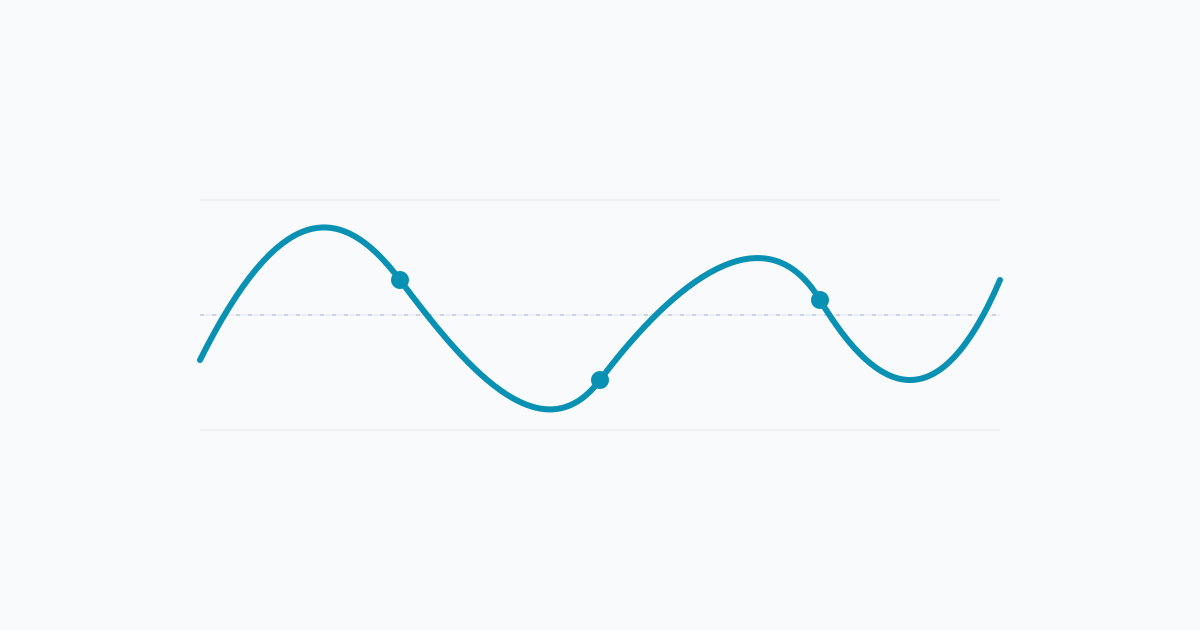
Energy swings across a day in patterns most people sense but never name. Log a 1 to 10 rating two or three times a day at consistent times, and your rhythm shows up in two or three weeks.

Two soft parallel lines on a quiet background, suggesting a high-signal pair of tracked fields

July 7, 2026

The Most Revealing Things to Track Together: A Ranked Guide to High-Signal Pairs

If you only have time for two or three tracking pairs, which ones reveal the most? This is an opinionated ranking of the highest-signal pairs in personal data, with the reasoning behind each pick and a short list of pairs to skip.

Two thin lines moving in parallel across a notebook page, suggesting two correlated metrics without a clear cause

July 2, 2026

Correlation vs Causation in Personal Data: How to Read Your Own Numbers Honestly

Personal analytics produces correlations all the time. The trap is treating each one as a cause. Here is what your own data can and cannot tell you, and how to act on a pattern without overclaiming.

An open notebook with a single short line of writing, suggesting a brief evening journal entry

June 30, 2026

Journaling for Busy People: A Quick Daily Journal That Survives a Real Week

Most journaling advice assumes twenty minutes a day. This is for people who realistically have sixty seconds. One sentence a day, done honestly, is more useful than three pages once a quarter.

A simple notebook on a quiet desk, suggesting a small, sustainable daily logging routine

June 25, 2026

Quantified Self Without Burnout: A Sustainable Practice for the Long Haul

Most quantified self setups quit by month four. Here is why the boom-and-bust cycle happens and a calmer set of rules for tracking that lasts years instead of weeks.

A simple weekly grid with most days filled in and one skipped, suggesting a habit measured by coverage rather than a streak

June 23, 2026

Habit Tracker Without Streaks: Why the Counter Stops Helping, and What to Use Instead

Streak counters work for the first few weeks, then quietly start to hurt. Here is why the number gets in the way, and the metrics that actually tell you whether the habit is sticking.

A bedside notebook and an early morning coffee, suggesting a calm log of last night's sleep

June 18, 2026

How Sleep Affects Focus: What the Connection Looks Like in Your Own Data

Last night's sleep and today's focus is the classic day-after pair in personal analytics. Here is what it actually looks like over a few weeks, what you can read into it, and what you cannot.

Two columns on a notebook page being connected by a thin line, suggesting a pair of tracked fields

June 16, 2026

Track Pairs, Not Singles: How to Design a Setup That Actually Reveals Patterns

One number tells you almost nothing on its own. The interesting patterns in personal data live between two fields. Here is how to design a tracking setup around pairs, with an anchor and a few well-chosen inputs.

A soft abstract gradient suggesting a quiet, shifting mood

June 11, 2026

Mood Tracking Without the Pressure: A Calmer Way to Log How You Feel

Mood tracking is the most common entry point into personal data, and the easiest to abandon. Here is a calmer way to log how you feel, including the things you should not do.

A morning coffee beside a notebook, suggesting a small daily logging routine

June 9, 2026

What to Track in Your Quantified Self Setup (Without Overcommitting)

A practical guide to picking your first three to five metrics. Start small, pair fields that talk to each other, and resist the urge to track twenty things at once.

A weekly calendar with two adjacent days subtly connected, suggesting a day-after pattern

June 4, 2026

Day-After Effects: Why Some Patterns in Your Data Only Show Up Tomorrow

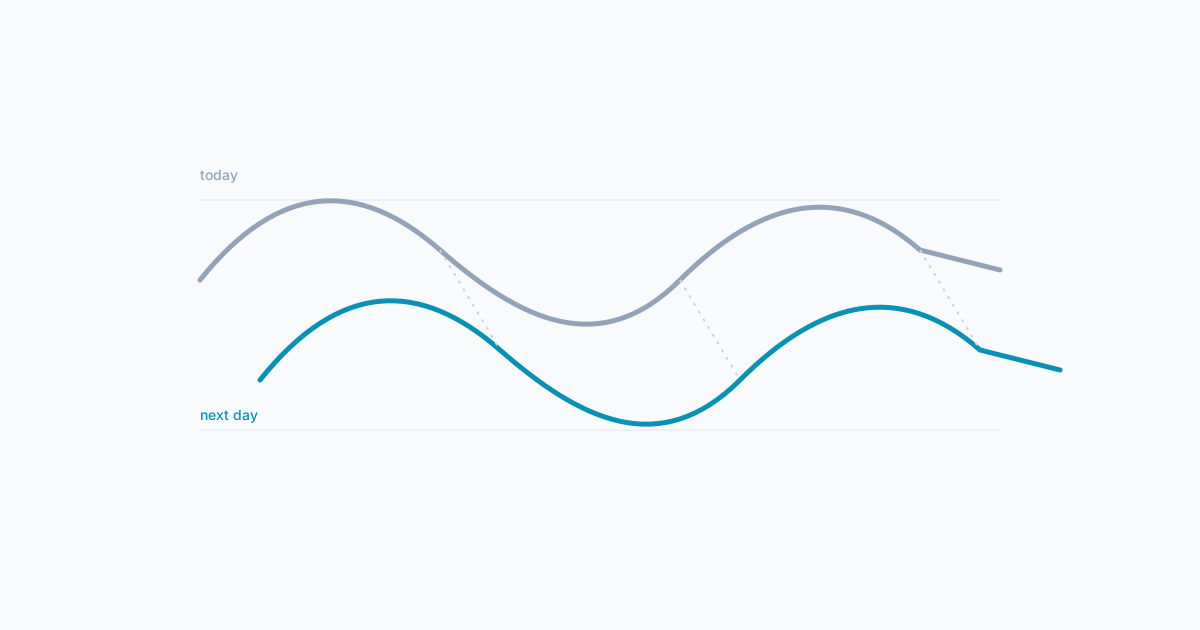
Some of the strongest patterns in your own data are not between things measured the same day. They are between yesterday and today. Here is why most trackers miss them, and how to see them.

An open notebook beside a coffee cup, suggesting calm daily logging

June 2, 2026

Personal Analytics: A Calm Beginner's Guide to Tracking Your Own Life

Personal analytics means looking at your own data about your own life to spot patterns you cannot see in the moment. Here is what it is, what it is not, and how to actually start.